

Table of contents
Simple Methods to Test If Sunglasses Are Polarized
What Do Polarized Sunglasses Actually Do?
Polarized vs. Non-Polarized Sunglasses: What Is the Difference?
Does Polarized mean UV Protection?
How to Choose High Quality Sunglasses
When Are Polarized Sunglasses Worth It?
Are Polarized Sunglasses Always Better?
What Should You Look for When Choosing Donahugh Sunglasses?
Are Donahugh Sunglasses Polarized?
FAQs About Polarized Sunglasses
Verify Polarization First, Then Evaluate Quality
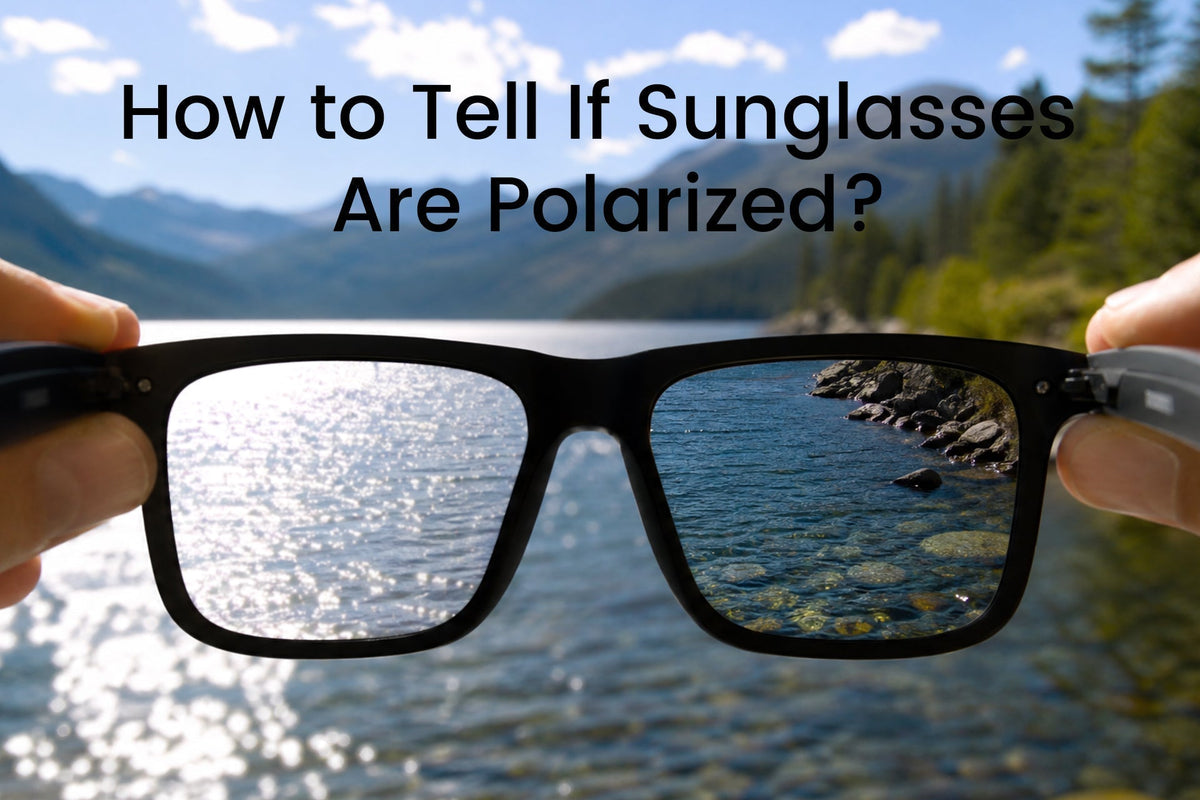
One of the easiest ways to tell if sunglasses are polarized is to look through the lenses at a phone, tablet, laptop, or LCD screen and slowly rotate the sunglasses. If the contrasts of the screen change when the lenses move from angle to angle, there is a strong possibility they might be polarized.
There are four effective methods to test if your sunglasses are polarized: testing the screen of your devices, testing the reflecting glare, testing two sunglasses against each other, and looking at the labels that are on the product. Polarized lenses help reduce glare caused by reflected light from surfaces such as water, roads, glass, and wet pavement, thus making many buyers interested in this property.
The Quickest Way to Tell If Sunglasses Are Polarized:
1.The Quickest Way to Know if Sunglasses Have Polarization.
2.Illuminate an LCD screen of a phone, tablet, PC, or a laptop.
3.Place goggles in front of one of the LCD screens.
4.Gradually turn the goggles in a circle.
5.Observe whether the color of the screen has changed.
6.If the display changes its color, this indicates that the sunglasses probably have polarization properties.
The screen may become darker or lighter depending on the gadget and your angle of view. It may not become black completely, so the result should be analyzed carefully.
Simple Methods to Test If Sunglasses Are Polarized
Listed below are four ways in which you can do some testing for yourself in the comfort of your own home or even as you shop.
1. Try the Phone or LCD Screen Test

This is the quickest and easiest method, as you will probably have access to the exact tools you need to try this test.
1.Raise the brightness on your phone or LCD screen.
2.Hold the sunglasses in front of your phone/lcd screen.
3.Observe through either of the lenses.
4.Rotate the sunglasses slightly.
5.Watch the screen carefully and check if it goes darker or lighter.
The screen may become darker at certain angles if the sunglasses are polarized.
What If the Screen Does Not Get Darker?
If your screen shows no change, try another phone or tablet, turn the screen and/or your sunglasses and apply the test using the reflection of light, or even better, test the sunglasses against another pair of polarized ones.
2. Check Reflections From Water, Glass, or a Shiny Surface

It is said that polarized lenses are perfect at minimizing light reflection, thus checking them against a reflective surface is a good follow-up step. Good surfaces to test against include water, wet roads, a car’s windshield, window glass, shiny tabletops, and car bodywork.
1.Look for the surface that has glaring spots.
2.Observe the glare with the sunglasses.
3.Turn or tilt your glasses gradually.
4.Find out whether or not there are any improvements in the glare.
Polarized lenses are known to reduce glare owing to the special coating but not eliminate glare completely.
3. Compare Them With Another Pair of Polarized Sunglasses

If you own another polarized pair of glasses, then this test will yield some good results.
1.Hold one pair above the other.
2.Look through the lenses that cover each other.
3.Rotate one of the pairs 90 degrees.
4.In this case, pay attention to the place where lenses intersect.
If both pairs of sunglasses are polarized, the overlapped area should become darker.
4. Check the Lens Markings and Product Specifications

Polarization information is also available in lens markings and on product packaging, specifications, and descriptions manufactured by the manufacturers. The common terms are "polarized," or simply "P."
Nevertheless, the name of the product cannot be considered as proof. You should always refer to lens specifications by the producer. The fact that a product has the polarization mentioned means that the sunglasses can effectively minimize glare; however, this does not mean that they have good UV protection, optical quality, etc.
What Do Polarized Sunglasses Actually Do?
Light can be reflected from the surface of the road, water, glass, car surface, or snow, which causes glare. The polarized glasses employ a filter that reduces glare significantly so that people do not have problems with the vision.
Polarized vs. Non-Polarized Sunglasses: What Is the Difference?
|
Feature |
Polarized Sunglasses |
Non-Polarized Sunglasses |
|
Reduces reflected glare |
Yes |
Limited |
|
Useful around water |
Often |
Less effective against glare |
|
Helpful in glare-heavy driving conditions |
Often |
Basic shading |
|
UV protection |
Depends on product specifications |
Depends on product specifications |
|
Screen visibility |
May appear darker at some angles |
Usually less affected |
|
Lens tint |
Can vary |
Can vary |
There is a difference between polarization and UV protection. Being polarized means being able to reduce glare while UV protection aids in protection against UV rays. Just because a lens is dark, does not mean that it is polarized and not every polarized lens guarantees a certain amount of UV protection. Polarization and UV protection are separate features. A polarized lens may also provide UV protection, but this should be confirmed through product specifications.
Does Polarized mean UV Protection?
Not at all. The two features of a lens are completely separate. Polarized lenses are primarily used for the elimination of glare from light reflection, while UV protection is meant to filter light rays.
Seeing "UV400," "100% UV protection," or "UV protection" does not automatically mean that the sunglasses in question will offer a certain level of UV protection because this feature is up to the manufacturer. Always check whether or not the sunglasses are polarized to the required level.
How to Choose High Quality Sunglasses
Polarization is just one factor. The quality of sunglasses is based on the whole build of lenses and frames, whether you choose styles such as round sunglasses or other frame shapes.
Check the UV Protection Information:
To know the UV rating, check if the manufacturer has provided any information about UV rating, especially for UV400 or 100% UV denial. Dark lenses by themselves don't determine how good the UV rating is. You should never accept the UV rating of a product unless you have got enough proof from the advertisements or product specifications of the product.
Check Optical Clarity:
Good sunglasses should have clear vision. You need to check if there are any refracted images or distortions through the lens. The moment you look through a lens with a straight line and move sunglasses from left to right, but you see bending images, this means that the product is of a low quality.
Consider the Lens Material:
Lens material determines how heavy the sunglasses will be and whether they will be comfortable to wear. Lens material should be verified from the specification sheet provided by the manufacturer and one should not compare any type of glasses lens with an alternative lens.
Check the Frame Material and Construction:
In order to understand the quality of sunglasses, consider frame materials commonly used in acetate sunglasses, hinges, temple alignment, finishing, stability, fitting, weight, and comfort. Bad frame construction can lead to a bad experience, no matter how good the lens works.Polarization implies that you learn about one certain lens parameter. Lens’ clarity, UV information, material of the lenses, frame construction, fitting, and comfort tell you about the quality of sunglasses.
When Are Polarized Sunglasses Worth It?
Polarized sunglasses can be particularly helpful where reflected glare occurs often.
Driving:
Reflected glare on the road, wet surface, car surfaces, and glass is high. Polarized lenses would help bring a driving comfort due to reflected glare reduction, although they don’t make driving safe.
Fishing and Boating:
Water gives rise to high amounts of reflected glare. Polarized lenses have a major application with water because polarized lenses minimize the amount of glare due to reflection.
Beaches and Outdoors Activities:
When you connect water, sand, bright sunlight, and spending time outdoors for long periods of time, light plus glare comes into play. Light glare can be diminished, which can improve your convenience when outdoors for a long time.
Everyday City Wear:
Polarization is not limited only to sports and water activities. Even during your everyday activities you will find polarization relatively useful, walking, commuting, driving, dining outside in cafés, being in busy streets, or engaging in your weekend fun.
Are Polarized Sunglasses Always Better?
No. The choice of the right sunglasses depends on your activity which means that polarized lenses can have a negative influence on certain displays and screens because they can make them less bright at some angles.
What Should You Look for When Choosing Donahugh Sunglasses?
When comparing sunglasses, you cannot rely only on the label “polarized”. It is necessary to verify all the specifications of a product such as frame materials, lenses, fit, sizes, and the level of protection.
Donahugh products come in numerous shapes, materials, sizes, designs, and types of lenses. The manufacturers use different materials in the newest releases depending on the model. For instance, you may see pages that specify plant-based acetate frame, HD Nylon lenses, CR39 lenses, metal parts, and titanium parts.
Always check the Donahugh product page related to the specific product when you want to find out about particular lenses or materials. Donahugh sunglasses must be judged according to the particular frame shape and not according to the lens used in each model. In the process of selection, check the lens characteristics, the material of the frame, dimensions, and purpose of use.
Are Donahugh Sunglasses Polarized?
Do not automatically assume that each model is built with polarized lenses. These specifications will vary according to the model. Always check the product page for the exact information.
Just because a particular model from the Donahugh collection is called “Polar” does not mean that the lenses in the collection are polarized too. Ensure that the data given in the product description and not just the name of the product.
FAQs About Polarized Sunglasses
Can You Tell If Sunglasses Are Polarized Just by Looking at Them?
Not true. The color of the lens and the darkness of the lens are not enough to ensure that the lenses are polarized.
How Can I Check Polarized Lenses on a Smartphone?
Look at the phone screen through the sunglasses. Turn the sunglasses 90 degrees. When the phone screen appears to be going black, that means the sunspecs are getting polarized.
Do Polarized Sunglasses Always Turn a Phone Screen Black?
No. While sunglasses and polarized sunglasses do feature tints, the two terms do not refer to the same items. There are dark tints that are not polarized at all.
Are Polarized Sunglasses Better for Driving?
The process of polarization helps eliminate glare. This implies that using polarized sunglasses while driving is beneficial in situations in which glare is present. However, this does not mean that driving becomes safe automatically.
Do Polarized Sunglasses Automatically Have UV Protection?
This is false. Polarization and UV protection are two separate characteristics. Always read the company information regarding the UV protection of the sunglasses you are willing to buy.
Are Cheap Sunglasses Polarized?
It depends. Just relying on the price of the glasses does not give us enough information whether the lenses are polarized or not.
Verify Polarization First, Then Evaluate Quality
Before making a purchase of men's sunglasses, answer these three straightforward questions:
Are the sunglasses really polarized? Make sure to check with a phone, glare test or two lens test if you can verify.
Find out what information the manufacturer has on UV protection. We cannot assume that polarized sunglasses have any UV protection.
Are the frames and lenses made properly? Check the quality of the eyesight, the materials of the lenses and frames, the way they are constructed, how they are fastened, and their comfort
Polarization is definitely an important feature for glasses worn in conditions of excessive amounts of glare but one still needs to analyze all aspects of the product in order to be sure one has made the right decision.


Leave a comment
This site is protected by hCaptcha and the hCaptcha Privacy Policy and Terms of Service apply.